

Paediatric Occupational Therapy Brisbane
Empowering
Children and Families
In Sync Therapy Hub® provides paediatric occupational therapy, physiotherapy and speech therapy in Brisbane. We support babies, children and teenagers with sensory processing, emotional regulation, motor development, handwriting, self-care, feeding and participation at home and school.
Specialists in Ayres Sensory Integration®, neurodevelopment and early intervention.


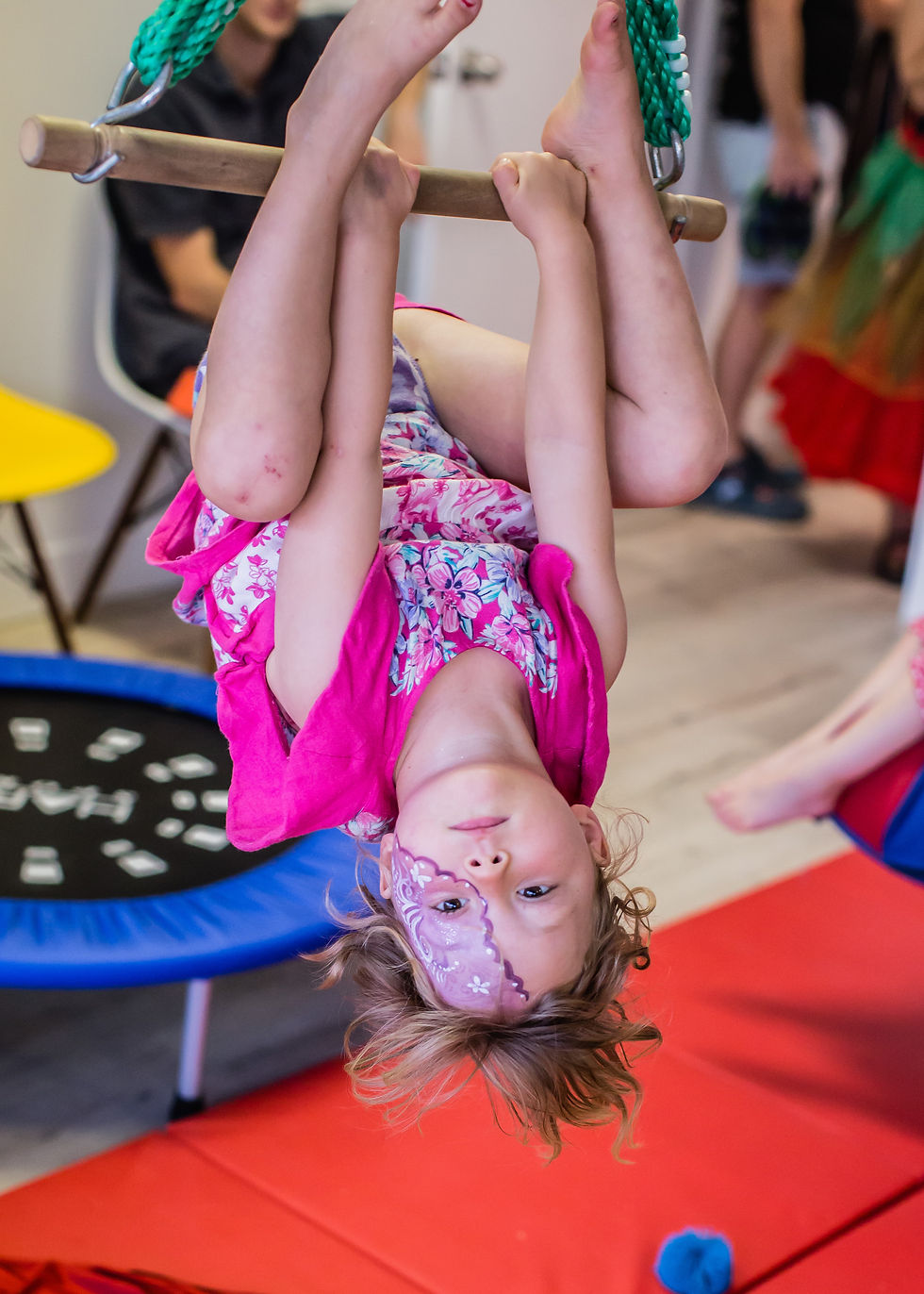


.jpeg)

In Sync With Your Child's Needs
Every child experiences the world differently. We help children build the sensory and developmental skills they need to feel confident, connected and capable in everyday life.
-
Making sense of sensory experiences to feel more comfortable with sounds, touch, movement and everyday environments.
-
Building emotional regulation to manage big feelings, sensory overload and daily transitions.
-
Developing body awareness and coordination for better balance, motor planning and confidence in movement.
-
Strengthening sensory-motor foundations to support early development, learning and play.
-
Growing everyday independence in dressing, eating, toileting and self-care.
-
Supporting confident participation in classroom activities, friendships, play and family life.

.jpeg)
When should I consider an occupational therapy assessment for my child?
You do not need to wait for a diagnosis or referral to speak with an occupational therapist. An assessment may be helpful when sensory, motor, emotional or everyday challenges are beginning to interfere with your child’s participation at home, kindy, school, play or in the community.
Daily life shouldn't feel like a constant struggle. These questions help identify small signs that your child might benefit from sensory or motor support.
At Home
Does your child
-
Find morning or bedtime routines feel like a battle?
-
Show sensitivity to clothing or textures, struggle with hair brushing, or avoid messy play?
-
Find dinnertime challenging, with a limited diet, difficulty sitting still, or trouble using cutlery?
-
Seem clumsy, bumping into things or tripping often?
-
Tire easily during everyday activities?
-
Have difficulties with getting to sleep?
- Struggle to organize themselves?
At School
Does your child
-
Struggle to sit upright at the desk or fidget constantly?
-
Avoid handwriting or tire quickly with written work?
-
Find it hard to follow multi-step classroom instructions?
-
Are they easily overwhelmed by loud hallways or busy playgrounds?
-
Find playtime activities challenging or overwhelming?
-
Have difficulties with attention (distracted or zoned out)?
-
Seem anxious about attending school or struggles to learn new tasks?
With Behaviour
Does your child
-
Have big emotional reactions, can be agressive or angry?
-
Significantly struggle with transitions between activities or change in general?
-
Constantly seek movement or crash into furniture?
-
Struggle to join in with peers or navigate social situations?
-
Appear anxious, controling or has extreme outbursts?
-
Find it very difficult to calm down?
Sometimes it doesn’t look obvious
Sometimes the difficulty is easy to miss
“But school says they’re fine...”
This is very common. Some children work extremely hard to manage the school environment. They may copy peers, follow strong routines or rely on other children to know what to do.
They can look like they are coping well, but may come home:
- Exhausted
- Emotional
- Irritable
- Needing lots of downtime
- Melting down over small things
- Unable to manage usual routine
This does not necessarily mean school is going badly. It may mean your child is using a lot of effort to keep up. An OT assessment can help understand whether the demands of the day are exceeding their sensory, motor or organisational capacity.
Masking & Hidden Struggles
Some children cope by adapting, copying others or following along with what is expected. At school they may appear quiet, compliant or “fine”, while at home you see exhaustion, big emotions or difficulty coping.
Others may look chatty, active, silly, distracted or “in their own world”.
Many children 'mask' their difficulties, using all their energy to hold it together, only for the stress to release once they are in their safe place at home.
- Emotional meltdowns shortly after school
- Refusal to complete homework
- Extreme fatigue or irritability in the evenings
- Restructuring daily tasks feels impossible

We partner with families and educators to provide purposeful, neurodiversity-affirming support that looks beyond behaviours to help every child thrive in their daily life
At In Sync Therapy Hub®, our comprehensive assessments explore your child’s unique sensory profile, strengths, development, and everyday experiences within a warm, family-centred environment.
We take the time to listen, observe, and partner with you, offering clear insights, practical recommendations, and a goal-focused pathway forward.
Services
Our Treatment Approach
Our approach is grounded in Ayres Sensory Integration® and neurodevelopmental principles, with a focus on early intervention.
Through individualized, play-based therapy that builds on each young person’s unique strengths. By developing foundational skills, we empower them to grow with confidence and resilience at home, at school, and in their community

Empowering Beginnings
Empowered Beginnings brings together Bubs & Big Questions (0–18 months), Developmental Playgroups (birth–3 years), and Interdisciplinary Early Intervention for Complex Needs.
All designed to build confident parenting and strong foundations, with play-based support, guidance, and coordinated care through the years that matter most.

What does a paediatric occupational therapist help with?
Paediatric occupational therapists help children take part in the everyday activities they need and want to do. Depending on the child, this may include dressing, eating, toileting, handwriting, play, emotional regulation, sensory processing, attention, motor planning, coordination and participating at school or in the community. At In Sync Therapy Hub, we look at the underlying skills affecting these everyday activities rather than focusing only on the behaviour or task that is difficult.
Paediatric physiotherapy in Brisbane
Our paediatric physiotherapists support babies, children and teenagers with movement and physical development, including delayed motor milestones, walking, balance, coordination, strength, endurance, low muscle tone, hypermobility, unusual gait patterns and participation in sport and everyday activities.


New Clients Roadmap
Beginning a therapy journey is a significant step.
At In Sync Therapy Hub®, we provide playful, neurodiversity-affirming care that builds strong foundations for your child's future.
1
Referral
Referrals can come from educators, a GP, other allied health professionals—or simply because you, as a parent, have concerns.
2
Enquiry Form
Complete our quick online enquiry form to begin and share your initial goals.
3
Assessment Booking
Our friendly Business Support Team will contact you to book an assessment and send through a parent questionnaire (this needs to be completed before your appointment).
4
Clinical Intake Call
A clinician will give you a call to chat about the assessment and how to best prepare.
5
Your child attends a comprehensive in-clinic assessment to explore their strengths, challenges, and needs.
Assessment Day
6
Assessment Feedback Session
You’ll receive a feedback session (usually online) on the same day, with clear insights and recommendations.
7
Therapy Journey Starts
Your child begins a personalised block of therapy tailored to their goals.
8
Reassessment & Next Steps
At the end of the therapy block, we review progress together and decide whether it’s time for discharge or another block of support.
Why Parents Choose In Sync
20+ years of experience
Experts in Ayres Sensory Integration®
Family-centered approach
Collaborative care

.jpeg)
Being a kid is important work.
Building sensory skills for the most important job there is.
Follow Us On Socials
Stay connected with In Sync Therapy Hub® on Instagram, Facebook, TikTok and more.